
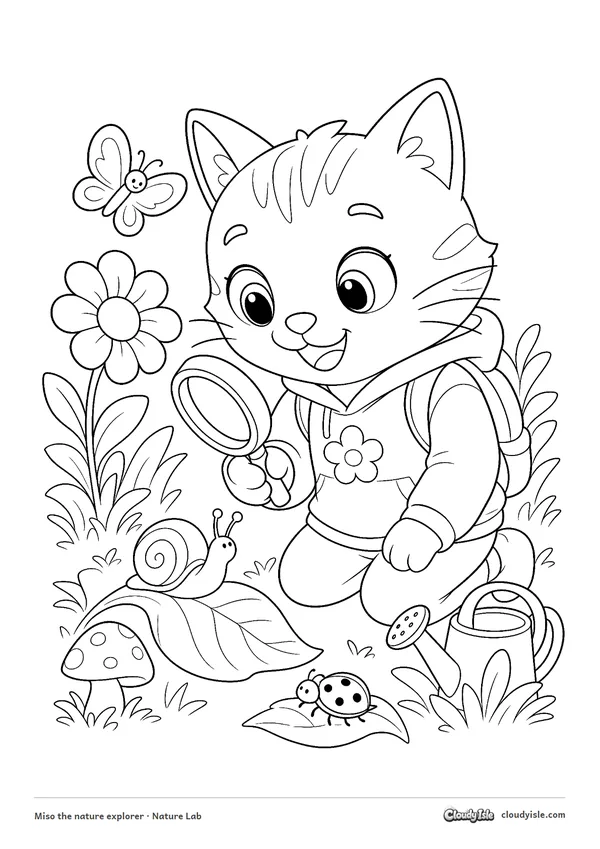
How to use this colouring page
Before colouring, play "I spy" with the picture: "I spy something with spots" (the ladybird), "something with a shell" (the snail). Talk about where each creature lives and what it eats. Then colour, and plan a little nature hunt for the next walk.
Growing a little scientist
Young children are natural scientists: they observe, ask questions and test ideas. A magnifying glass, a jar for collecting leaves and plenty of time to look closely are all they need. Asking "What do you notice?" rather than giving the answer keeps their curiosity going.
More ideas in nature activities for preschoolers and teaching kids about animal habitats.
Questions parents ask
How can I connect this page to a real nature walk?
After colouring, take a little nature hunt: can you find a snail, a ladybird, a leaf and a flower? A cheap magnifying glass makes children feel like real scientists.
Are snails safe to touch?
Gently touching a garden snail is usually fine, but always wash hands with soap afterwards, and never eat anything found outside. Put creatures back where you found them.
Free for home and classroom use. Please share the link to this page rather than the PDF itself. Our guides for parents explain the skills behind each sheet.
More printables
Printable
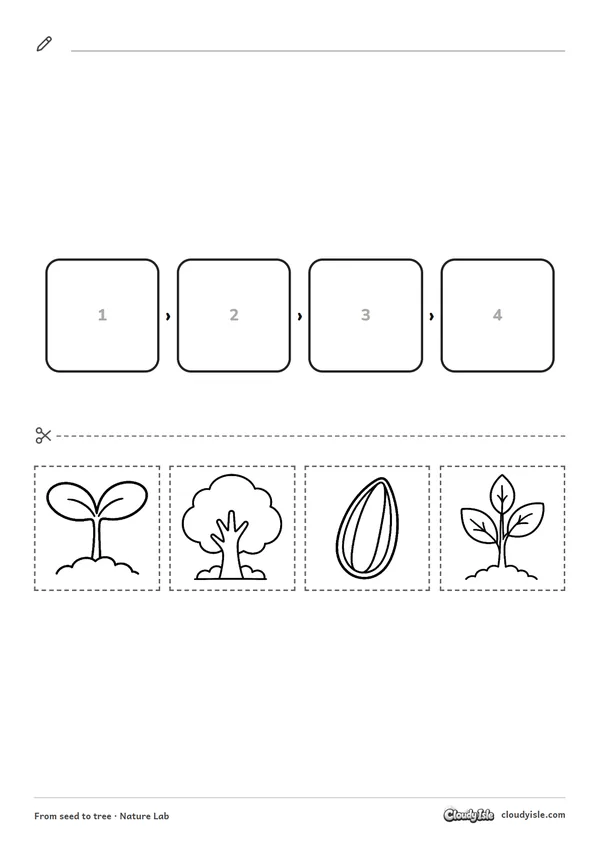
From Seed to Tree: Free Plant Life Cycle Sequencing Sheet
Four pictures to cut out and put in order: a seed, a sprout, a young plant and a tree. Your child glues them into the numbered boxes from one to four. It is a simple…
Story pack · 5 min read
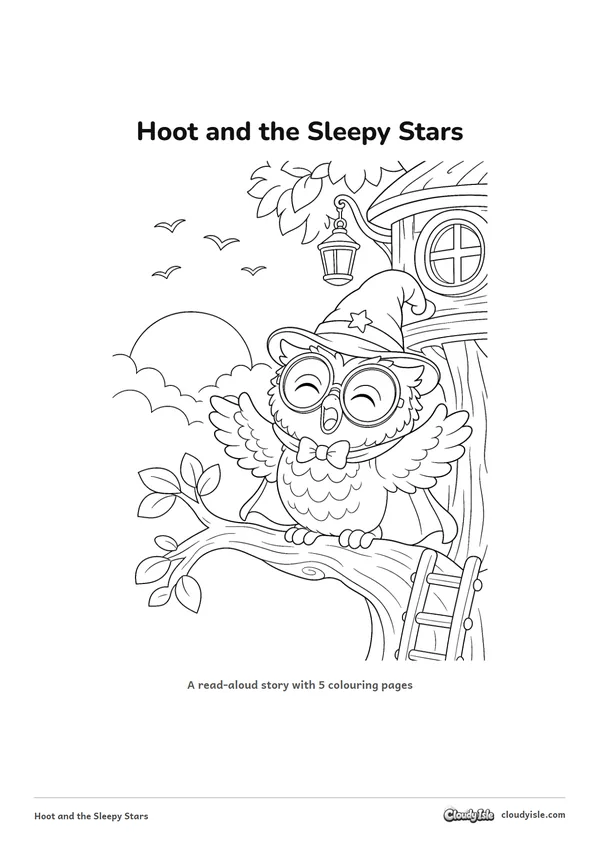
Hoot and the Sleepy Stars: A Free Bedtime Story to Read Aloud
A gentle five-minute story for grown-ups to read aloud at bedtime: Hoot the owl helps a little star who cannot sleep, with slow breathing, a quiet story and a cloud…
Story pack · 5 min read
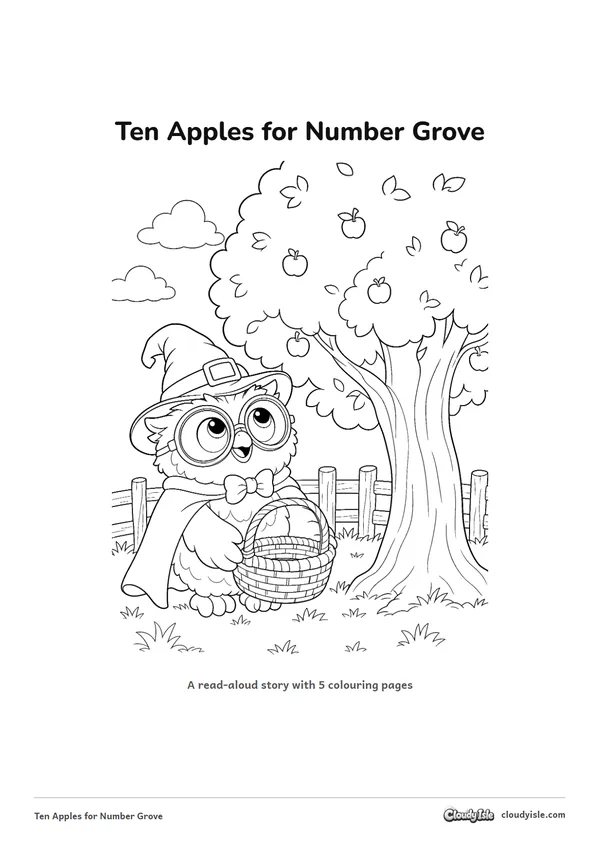
Ten Apples for Number Grove: A Free Counting Story to Read Aloud
A short counting story for grown-ups to read aloud: Hoot needs ten apples for a picnic, and his friends find them three, two and five at a time. Children count along…